JMeter Performance Testing with CI/CD, Docker & Kubernetes – Live Training
This Performance Testing with Apache JMeter Course is designed to help you learn and master JMeter performance testing from basics to advanced real-world implementation. You will understand core concepts like load testing, stress testing, and scalability testing, and gain hands-on experience in creating and executing tests using Apache JMeter.
The course covers JMeter scripting, parameterization, correlation, and dynamic scripting using BeanShell, enabling you to simulate real-time user scenarios. You will also learn performance monitoring using Prometheus and Grafana, helping you analyze system performance and identify bottlenecks.
To prepare you for industry environments, this JMeter training with real-time projects includes CI/CD integration with Jenkins, performance monitoring with AppDynamics, and container-based testing using Docker and Kubernetes. The course also introduces AI-powered performance testing techniques for intelligent analysis and optimization.
About the Instructor:
|
Vishnu M is an EX-IITian with 14+ years of extensive industry experience in Performance Testing, Performance Engineering, and AI-Driven Testing. He has worked on complex, large-scale enterprise applications, focusing on system scalability, reliability, optimization, and testing AI/LLM-based systems. His strong foundation in both traditional performance testing and modern AI testing technologies positions him as a trusted expert in next-generation quality engineering. He brings strong hands-on expertise with industry-leading tools such as Apache JMeter, Micro Focus LoadRunner, AppDynamics, and Dynatrace. Vishnu also specializes in AI & LLM Testing, prompt validation, model behavior testing, Chaos Engineering, and advanced performance monitoring and observability. His ability to combine performance engineering, AI testing, and resilience testing helps learners understand how to test modern, intelligent, and highly scalable systems. With an unmatched passion for teaching, Vishnu has 14+ years of technical training experience and has trained 700+ students over the last 5 years. His sessions are highly interactive, hands-on, and easy to follow, with a strong focus on real-time use cases and practical exercises. He has a natural talent for simplifying complex performance, AI, and observability concepts, making his training highly effective for both beginners and experienced professionals. |
Sample Demo Video:
JMeter Performance Testing Basics to Master Day1:
Live Sessions Price:
For LIVE sessions – Offer price after discount is 300 USD 259 109 USD Or USD13000 INR 12900 INR 8900 Rupees
OR
What will I learn by the end of this course?
- Understand core performance testing concepts including load testing, stress testing, spike testing, and scalability testing
- Design, create, and execute performance test scripts using Apache JMeter
- Perform parameterization, correlation, and dynamic scripting for real-world scenarios
- Analyze test results and identify performance bottlenecks and system limitations
- Integrate JMeter with Jenkins CI/CD pipelines for automated performance testing
- Perform container-based performance testing using Docker and Kubernetes
- Monitor application performance using Prometheus, Grafana, and AppDynamics
- Execute real-time performance testing projects based on industry use cases
- Implement performance testing in DevOps and cloud-native environments
- Apply AI-powered performance testing techniques for intelligent analysis and optimization
- Generate performance reports and provide recommendations to improve application performance
- Build scalable performance testing frameworks for enterprise applications
What student’s have to say about Vishnu:
| I had enrolled for Jmeter course by Vishnu sir, this was a really great course for beginning the journey for any performance tester. Vishnu sir is a great teacher and has tried to clear the concepts of performance testing very thoroughly, quite satisfied with the course. Thanks to Vishnu sir and Isha training solutions! – Satanu Bagchi
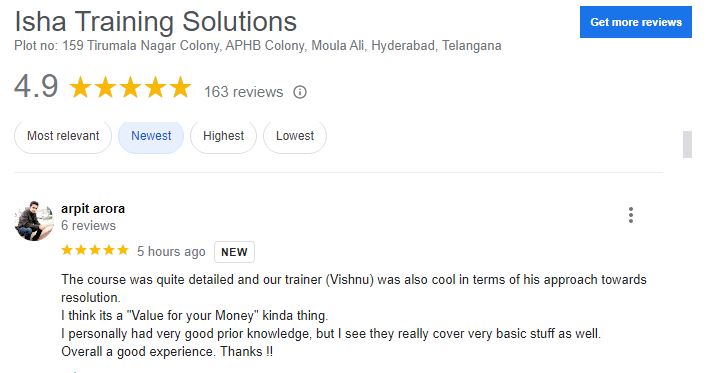
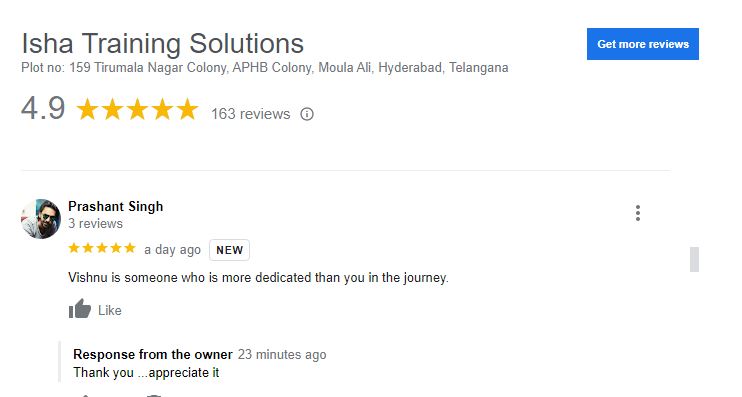
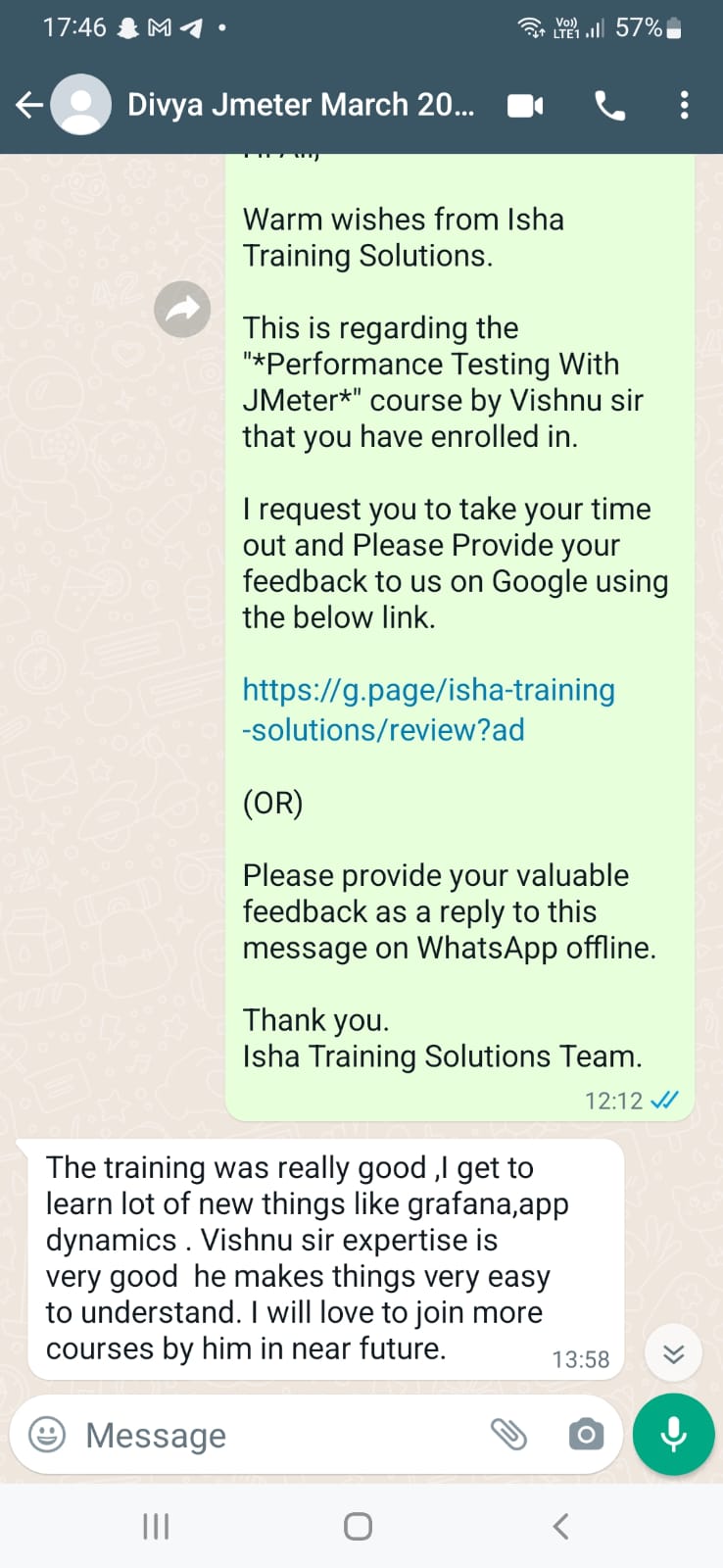
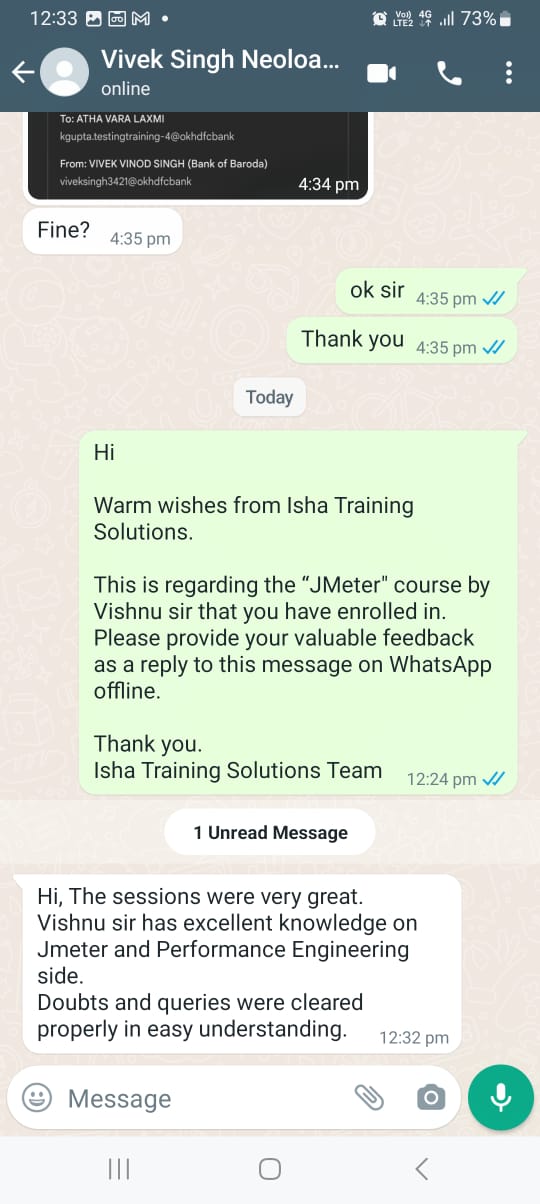
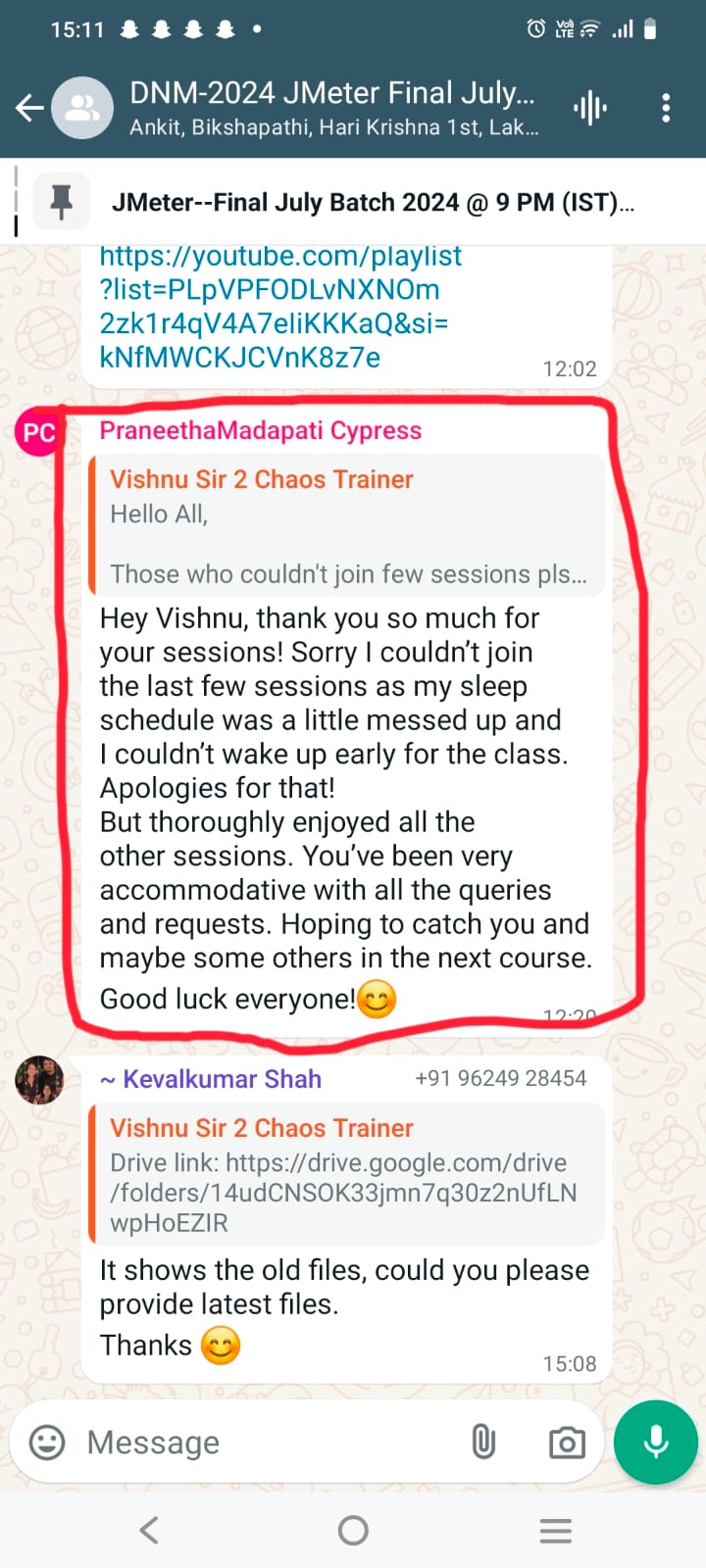
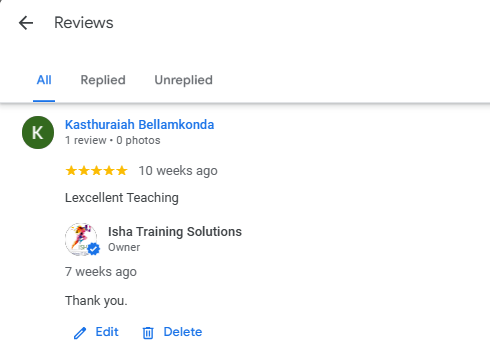
Hey Vishnu, thank you so much for your sessions! Sorry I couldn’t join the last few sessions as my sleep schedule was a little messed up and I couldn’t wake up early for the class. Apologies for that! But thoroughly enjoyed all the other sessions. You’ve been very accommodative with all the queries and requests. Hoping to catch you and maybe some others in the next course. Good luck everyone!😊 – Praneetha Mandapati It was pleasure meeting with you thru this learning session and get taught on each area what we have doubts in respective of syllabus. it would appreciable and once again thank you for your support and assistance further. 🙏🏻 – Devang Hi @Vishnu Sir 2 Chaos Trainer thanks for all the wonderful insights you have provided throughout the sessions. It was always very lively and being back from my 2nd Maternity break I was somehow a bit less motivated and skeptical but all your classes really helped me brush things up real quick and also helped learning new things.. Will surely keep in touch 😊 – Ramya Hi, The sessions were very great. Vishnu sir has excellent knowledge on Jmeter and Performance Engineering side. Doubts and queries were cleared properly in easy understanding. – Vivek Singh Excellent Teaching – Kasthuraiah Bellamkonda very good session, very composed trainer. – Pallavi khare The training was really good ,I get to learn lot of new things like grafana,app dynamics . Vishnu sir expertise is very good he makes things very easy to understand. I will love to join more courses by him in near future. – Divya The course was quite detailed and our trainer (Vishnu) was also cool in terms of his approach towards resolution. Vishnu is someone who is more dedicated than you in the journey. – Prashant Singh Excellent explanation of Performance testing topics. Very useful for beginners as well as for the experienced people to revise the basics – Micheal.s This course is recommended for a beginner who wants to learn load runner and enter into performance testing background – Naveen The teaching methods are very much interactive. you can learn alot from Vishnu sir. this is the best course i have come across regarding JMeter tool – Sachin Vishnu has been really amazing as of now. He is undoubtedly one of the best instructor who can teach LoadRunner in such a great fashion. – Sneha It is really a nice course which give a beautiful insights in multiple core areas. – Pooja |
Salient Features:
- 40+ Hours of Live JMeter Performance Testing Training with real-time project implementation
- Lifetime access to recorded sessions for continuous learning and revision
- Hands-on practical sessions with real-world performance testing scenarios
Who can enroll in this course?
- Manual Testers who want to transition into Performance Testing using Apache JMeter
- Automation Testers looking to add JMeter performance testing skills to their profile
- Performance Testers aiming to upskill with DevOps, Cloud, and AI-powered testing tools
- QA Engineers and QA Leads working on web and API performance validation
- Developers who want to analyze and improve application performance and scalability
- DevOps, SRE, and Cloud Engineers involved in CI/CD and monitoring pipelines
- Freshers or beginners interested in starting a career in performance testing and load testing
- Anyone looking to build real-world, job-ready performance engineering skills
This course will cover each of these topics in-depth, with hands-on exercises and real-world examples to help you master performance testing with JMeter and related technologies.
Highlights of this course:
JMeter: a popular open-source load testing tool
BeanShell: a scripting language used to extend JMeter’s functionality
Grafana: a visualization tool used to create dashboards and reports
Jenkins: a popular continuous integration and continuous deployment (CI/CD) tool
AppDynamics: a performance monitoring tool used to monitor applications
Kubernetes: a container orchestration system used to manage containerized applications
Docker: a containerization platform used to package and deploy applications
This course will cover each of these topics in-depth, with hands-on exercises and real-world examples to help you master performance testing with JMeter and related technologies.
Course syllabus:
Jmeter Introduction & Jmeter core concepts
- JMeter History, Protocols Supported & Its Features
- Java (JDK & JRE) Installation & Java Environment/System Variable (or Home Path) Setup
- JMeter Download, Installation & Launching on Windows & Mac
- HTTP(s) Protocol: – Request, Response, Headers, Request Methods, & Status Codes
- Browser Developer Tool, HTTP/HTML Requests, Embedded Resources, Transaction (or User Action), Cookies, Cache, User Session
- Types of HTTP Request Methods & CRUD Operations: – GET, POST, PUT & DELETE
Jmeter Scripting
- Scripting using Docker, Kubernetes-based demo application running on microservices
- JMeter’s 12 Major Elements (or Components)
- Port & Proxy Server Setup & Recording from Different Browsers
- Filtering Irrelevant Requests & Embedded Resources
- JMeter Certificate Installation in Different Browsers, Recording, & Certificate Regeneration
- HTTP(s) Test Script Recorder Element, Its Attributes, & Its Best Practices Settings
- JMeter’s Recording Best Practices
- Walk-through of JMeter’s Directory: – Various Files & Folders
- JMeter’s Properties Files
- JMeter Plugin Manager & Plugins Installation & Uninstallation
- Scenarios Identification & Documentation for Performance Testing of a Web Application (Product Booking Scenario)
- End to End Recording, Scripting & Enhancement of above Scenarios in JMeter
- JMeter’s Best Practices for Scripting & Enhancement
- Dynamic Values & Authorization Tokens, & Their Handling
- Correlation & Parameterization
- VUsers (or Threads), Ramp Up, Ramp Down, Loop, Think Time, Pacing
- Regular Expression in JMeter
- Regular Expression Extractor with Its Attributes in Detail
- Realtime Use Cases Examples of Dynamic Values Extraction in JMeter
- Beanshell scripting and challenges
Jmeter Test Execution
- Test Execution in Non-GUI Mode with Its Best Practices
- JMeter’s Java Heap Size Setting
- Understanding Test Summarizer
- JMeter HTML Dashboard Report Generation in Non-GUI Mode with Its Best Practices
- Importance of JTL file
- Changing Response Time Values to Seconds in HTML Report
- Decreasing the Summarizer Time
- Stopping Test Execution in Non-GUI Mode
- Test Execution & HTML Report Generation in GUI Mode
- Understanding JMeter HTML Report
- Saving Complete Requests & Responses for Failed Requests of a Test to a File
- Parameterizing Important Parameters Using __P() function & Why to Use this function?
- Passing Arguments from CLI in Non-GUI Execution
- Scope of JMeter Elements & Variables
- Local & Global Variables
- Execution Order (or Presidency) of JMeter Elements
- Relative & Absolute Path Setup in JMeter
- Debugging of Script in JMeter: – 4 helpful options
- CSV Data Set Config & Random CSV Data Set Config
- Distributed Load Testing in JMeter using Load Generators (LGs) in GUI & Non-GUI Modes (Master & Slaves Concept)
- Types of Performance Testing
- Test Run & Reporting
JMeter Elements, Their Sub-Elements & Their Attributes in Detail
- Test Plan
- Non-Test Elements
- Thread Group
- Controller Elements of JMeter
- Sampler Elements of JMeter
- Config Elements of JMeter
- Assertion Elements of JMeter
- Timer Elements of JMeter
- Listener Elements of JMeter
- Pre & Post Processor Elements of JMeter
JMeter Web Services Execution
JMeter REST services Execution
JMeter Integration with Appdynamics, Grafana
Jmeter integration with Jenkins
AI-Powered Performance Testing
AI for Test Script Creation
- Generate basic JMeter scripts using natural language prompts
- Convert user journeys / business flows into JMeter test steps
- Automatically identify and apply:
Parameterization
Correlation handling
Test data generation
Detect and fix common script errors - Assist in creating and analysing NFRs (Non-Functional Requirements)
- Generate performance test plans and strategy automatically
AI for Load Test Setup
- Recommend optimal:
Number of virtual users
Ramp-up time
Test duration - Suggest appropriate load patterns, such as:
Normal load
Spike testing - Analyze test execution data to:
Identify slow or underperforming requests
Highlight bottlenecks early
AI for Result Analysis
- Interpret performance metrics including:
Response time
Throughput
Error percentage - Automatically identify:
Failed requests
Slow APIs or pages
Compare current vs previous test runs - Generate:
Clear test summaries
Root cause analysis (RCA) insights
AI + Monitoring Integration
- Interpret system and application monitoring dashboards
- Explain resource utilization metrics such as:
CPU usage
Memory consumption
Disk and network utilization - Detect and highlight performance anomalies like:
CPU spikes
Memory leaks
Resource saturation
AI for Performance Testers
- Generate JMeter scripts using simple natural language prompts
- Assist in debugging:
Assertion failures
Script execution errors - Auto-generate:
Test case descriptions
Execution reports
Email-ready performance summaries
Live Sessions Price:
For LIVE sessions – Offer price after discount is 300 USD 259 109 USD Or USD13000 INR 12900 INR 8900 Rupees
FAQ
1. What will I learn in this JMeter Performance Testing course?
In this JMeter Performance Testing training, you will learn performance testing concepts, JMeter scripting, correlation, parameterization, real-time project implementation, and integration with modern tools like Jenkins, Docker, Kubernetes, Prometheus, and Grafana.
2. Does this course include CI/CD integration with Jenkins?
Yes, this course provides hands-on experience integrating Apache JMeter with Jenkins CI/CD pipelines, allowing you to automate performance testing as part of DevOps workflows.
3. Will I learn Docker and Kubernetes in this performance testing course?
Yes, this training includes container-based performance testing using Docker and Kubernetes, helping you test modern microservices and cloud-native applications.
4. Is this JMeter course suitable for beginners?
Yes, this course starts from basic performance testing concepts and gradually progresses to advanced topics like DevOps integration, monitoring tools, and real-time projects, making it suitable for beginners and experienced testers.
5. Does this course include real-time performance testing projects?
Yes, the course includes real-time performance testing projects, allowing you to gain hands-on experience with real industry scenarios and enterprise applications.
6. What monitoring tools will I learn in this course?
You will learn performance monitoring and observability using industry-standard tools such as:
-
Prometheus
-
Grafana
-
AppDynamics
These tools help visualize performance metrics and identify system bottlenecks.
7. Will I receive a certificate after completing the JMeter course?
Yes, you will receive a course completion certificate, which validates your performance testing skills and helps improve your career opportunities.
8. Who can enroll in this JMeter Performance Testing training?
This course is ideal for:
-
Manual testers
-
Automation testers
-
QA engineers
-
Developers
-
DevOps engineers
-
Freshers and beginners
-
Anyone interested in performance testing careers
9. Will this course help me get a job in Performance Testing?
Yes, this course prepares you for roles such as:
-
Performance Test Engineer
-
Performance Engineer
-
QA Automation Engineer
-
SDET
-
DevOps Performance Engineer
You will gain real-world skills required by companies.
10. What makes this JMeter course different from others?
This course includes:
-
Real-time project training
-
CI/CD integration with Jenkins
-
Docker and Kubernetes performance testing
-
Monitoring using Prometheus and Grafana
-
AI-powered performance testing concepts
-
Hands-on enterprise-level training
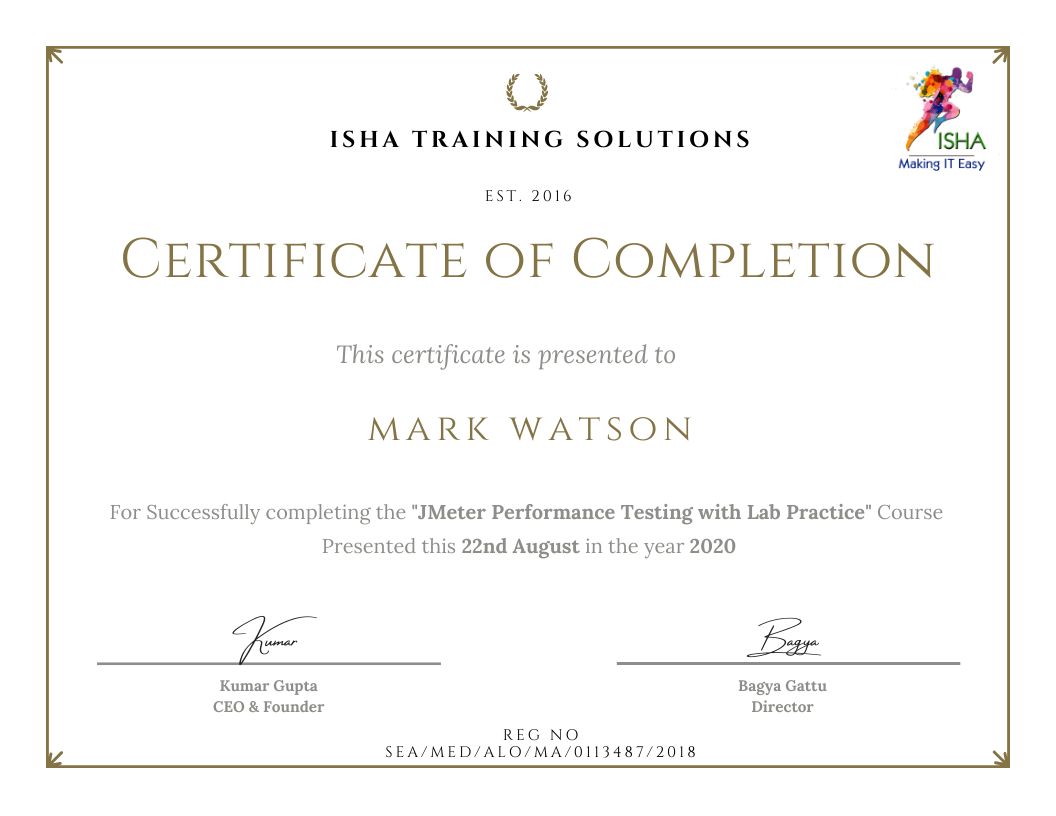
Sample Course Completion Certificate:
Your course completion certificate looks like this……
Note:
To maintain the quality of our training and ensure a smooth learning experience for all participants, we do not allow batch repetition or switching between courses.
To reiterate, moving from one course to another or shifting from one trainer to another (even if it is the same course) is not possible. Changing batches or trainers in any form is strictly not permitted.
We request all learners to attend the scheduled sessions regularly and make the most of their learning journey. Thank you for your understanding and continued support.
Reviews:




Course Features
- Lectures 78
- Quiz 0
- Duration 40 hours
- Skill level All levels
- Language English
- Students 1578
- Assessments Yes
- 10 Sections
- 78 Lessons
- 40 Hours
- Jmeter Introduction & Jmeter core concepts5
- 1.1JMeter History, Protocols Supported & Its FeaturesCopy (Copy)
- 1.2Java (JDK & JRE) Installation & Java Environment/System Variable (or Home Path) Setup JMeter Download, Installation & Launching on Windows & MacCopy (Copy)
- 1.3HTTP(s) Protocol: – Request, Response, Headers, Request Methods, & Status CodesCopy (Copy)
- 1.4Browser Developer Tool, HTTP/HTML Requests, Embedded Resources, Transaction (or User Action), Cookies, Cache, User SessionCopy (Copy)
- 1.5Types of HTTP Request Methods & CRUD Operations: – GET, POST, PUT & DELETECopy (Copy)
- Jmeter Scripting20
- 2.1Scripting using Docker, Kubernetes based demo application running on microservicesCopy (Copy)
- 2.2JMeter’s 12 Major Elements (or Components)Copy (Copy)
- 2.3Port & Proxy Server Setup & Recording from Different BrowsersCopy (Copy)
- 2.4Filtering Irrelevant Requests & Embedded ResourcesCopy (Copy)
- 2.5JMeter Certificate Installation in Different Browsers, Recording, & Certificate RegenerationCopy (Copy)
- 2.6HTTP(s) Test Script Recorder Element, Its Attributes, & Its Best Practices SettingsCopy (Copy)
- 2.7JMeter’s Recording Best PracticesCopy (Copy)
- 2.8Walk-through of JMeter’s Directory: – Various Files & FoldersCopy (Copy)
- 2.9JMeter’s Properties FilesCopy (Copy)
- 2.10JMeter Plugin Manager & Plugins Installation & UninstallationCopy (Copy)
- 2.11Scenarios Identification & Documentation for Performance Testing of a Web Application (Product Booking Scenario)Copy (Copy)
- 2.12End to End Recording, Scripting & Enhancement of above Scenarios in JMeterCopy (Copy)
- 2.13JMeter’s Best Practices for Scripting & EnhancementCopy (Copy)
- 2.14Dynamic Values & Authorization Tokens, & Their HandlingCopy (Copy)
- 2.15Correlation & ParameterizationCopy (Copy)
- 2.16VUsers (or Threads), Ramp Up, Ramp Down, Loop, Think Time, PacingCopy (Copy)
- 2.17Regular Expression in JMeterCopy (Copy)
- 2.18Regular Expression Extractor with Its Attributes in DetailCopy (Copy)
- 2.19Realtime Use Cases Examples of Dynamic Values Extraction in JMeterCopy (Copy)
- 2.20Beanshell scripting and challengesCopy (Copy)
- Jmeter Test Execution22
- 3.1Test Execution in Non-GUI Mode with Its Best PracticesCopy (Copy)
- 3.2JMeter’s Java Heap Size SettingCopy (Copy)
- 3.3Understanding Test SummarizerCopy (Copy)
- 3.4JMeter HTML Dashboard Report Generation in Non-GUI Mode with Its Best PracticesCopy (Copy)
- 3.5Importance of JTL fileCopy (Copy)
- 3.6Changing Response Time Values to Seconds in HTML ReportCopy (Copy)
- 3.7Decreasing the Summarizer TimeCopy (Copy)
- 3.8Stopping Test Execution in Non-GUI ModeCopy (Copy)
- 3.9Test Execution & HTML Report Generation in GUI ModeCopy (Copy)
- 3.10Understanding JMeter HTML ReportCopy (Copy)
- 3.11Saving Complete Requests & Responses for Failed Requests of a Test to a FileCopy (Copy)
- 3.12Parameterizing Important Parameters Using __P() function & Why to Use this function?Copy (Copy)
- 3.13Passing Arguments from CLI in Non-GUI ExecutionCopy (Copy)
- 3.14Scope of JMeter Elements & VariablesCopy (Copy)
- 3.15Local & Global VariablesCopy (Copy)
- 3.16Execution Order (or Presidency) of JMeter ElementsCopy (Copy)
- 3.17Relative & Absolute Path Setup in JMeterCopy (Copy)
- 3.18Debugging of Script in JMeter: – 4 helpful optionsCopy (Copy)
- 3.19CSV Data Set Config & Random CSV Data Set ConfigCopy (Copy)
- 3.20Distributed Load Testing in JMeter using Load Generators (LGs) in GUI & Non-GUI Modes (Master & Slaves Concept)Copy (Copy)
- 3.21Types of Performance TestingCopy (Copy)
- 3.22Test Run & ReportingCopy (Copy)
- JMeter Elements, Their Sub-Elements & Their Attributes in Detail14
- 4.1Test PlanCopy (Copy)
- 4.2Non-Test ElementsCopy (Copy)
- 4.3Thread GroupCopy (Copy)
- 4.4Controller Elements of JMeterCopy (Copy)
- 4.5Sampler Elements of JMeterCopy (Copy)
- 4.6Config Elements of JMeterCopy (Copy)
- 4.7Assertion Elements of JMeterCopy (Copy)
- 4.8Timer Elements of JMeterCopy (Copy)
- 4.9Listener Elements of JMeterCopy (Copy)
- 4.10Pre & Post Processor Elements of JMeterCopy (Copy)
- 4.11JMeter Web Services ExecutionCopy (Copy)
- 4.12JMeter REST services ExecutionCopy (Copy)
- 4.13JMeter Integration and analysis with Appdynamics, Influxdb, GrafanaCopy (Copy)
- 4.14Jmeter integration with JenkinsCopy (Copy)
- AI-Powered Performance Testing0
- AI for Test Script Creation5
- 6.1Generate basic JMeter scripts using natural language promptsCopy (Copy)
- 6.2Convert user journeys / business flows into JMeter test stepsCopy (Copy)
- 6.3Automatically identify and applyCopy (Copy)
- 6.4Assist in creating and analysing NFRs (Non-Functional Requirements)Copy (Copy)
- 6.5Generate performance test plans and strategy automaticallyCopy (Copy)
- AI for Load Test Setup3
- AI for Result Analysis3
- AI + Monitoring Integration3
- AI for Performance Testers3